
Not a recipe, but a principle
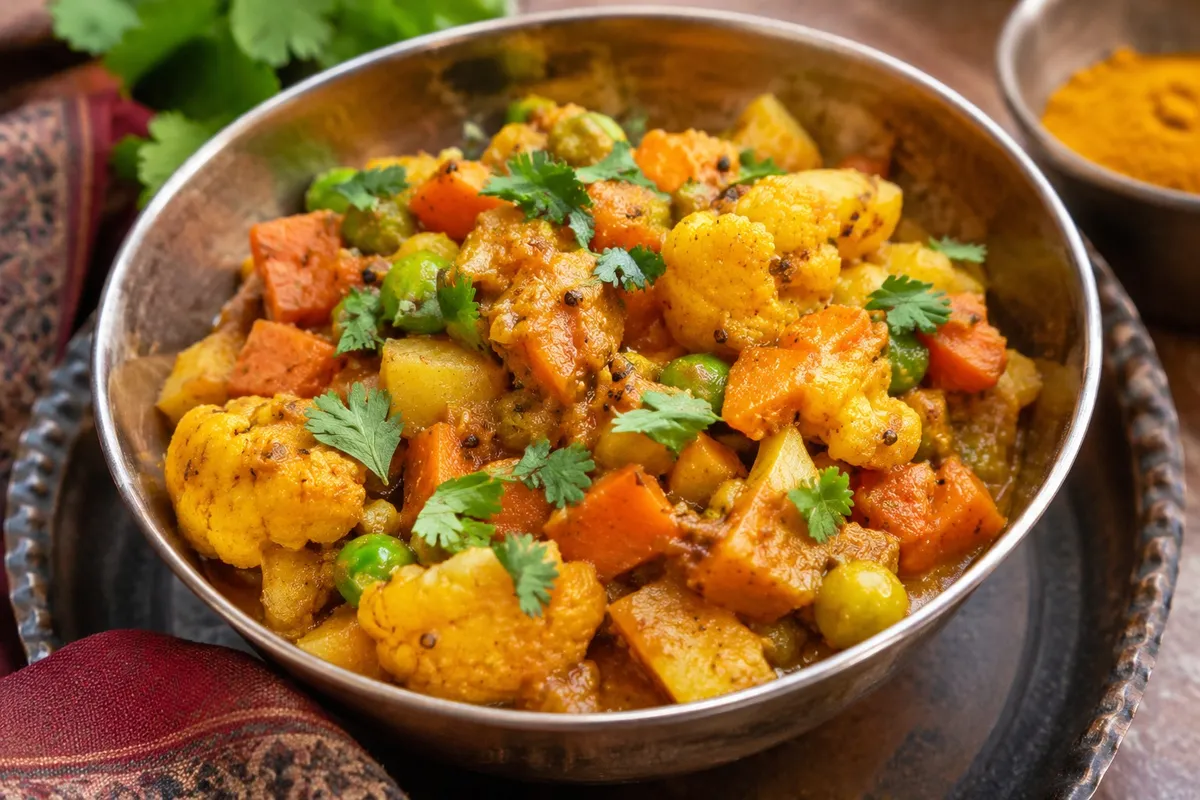
Sabji is not an elaborate dish. It is a principle: whatever is in the fridge today becomes a warm meal with a few spices. Carrots, courgettes, pumpkin, cauliflower or spinach, you take what the season offers.
In Ayurvedic cooking, vegetables are mostly eaten warm rather than raw. Many people find that pleasant, especially in the evening.
Ingredients
Serves 2 · About 25 minutes
- 400 g vegetables of your choice, for example carrots, courgettes, pumpkin, cauliflower or spinach
- 1 tbsp ghee or coconut oil
- 1 tsp whole cumin seeds
- 1 tsp turmeric
- ½ tsp ground coriander
- 1 tsp fresh ginger, finely grated
- Salt
- 2 to 3 tbsp water
- Optional: a pinch of garam masala
Method
- Wash the vegetables, peel if necessary and cut into bite-sized pieces.
- Heat the ghee in a frying pan or shallow pan. Add the cumin and toast until fragrant.
- Briefly sauté the ginger. Add the vegetables and mix well. Stir in the turmeric and coriander and add the water.
- Cover and cook gently over a low heat for 10 to 15 minutes until soft. Season with salt.
Which spices you need
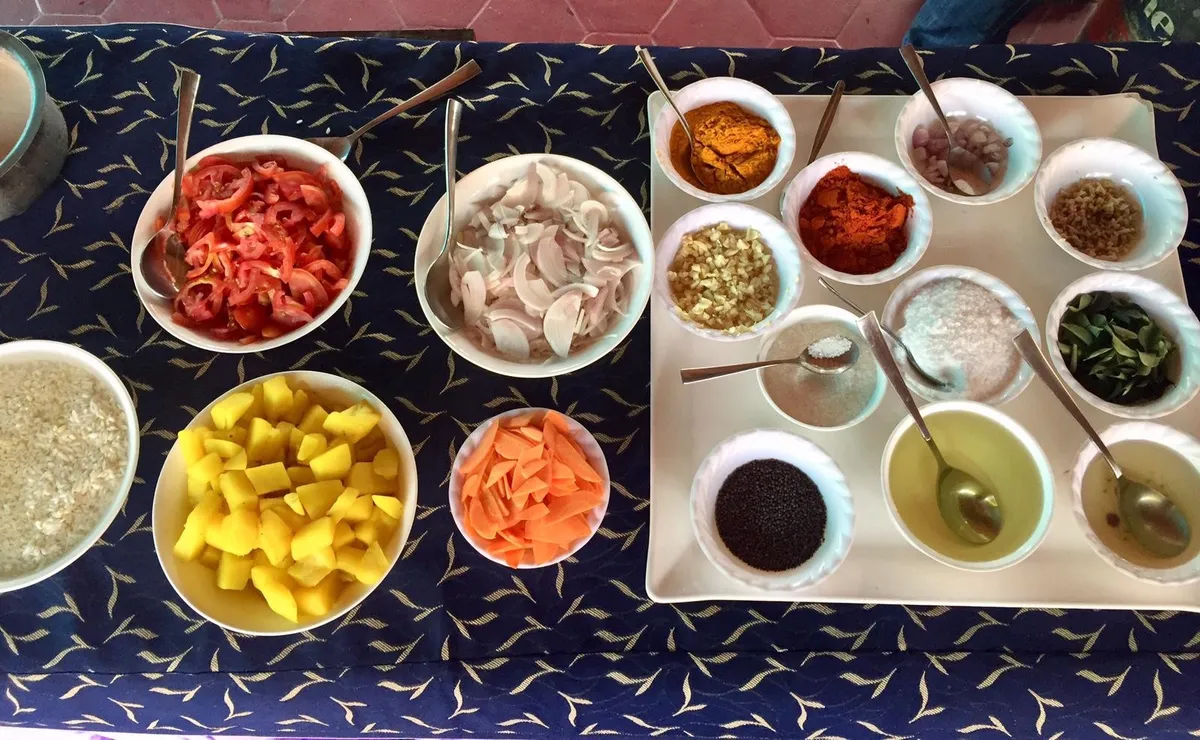
You can manage with just a few spices: cumin, turmeric, coriander and fresh ginger. The cumin is toasted in the fat first until it is fragrant. That is the moment the kitchen smells of India.
If you like, add a pinch of garam masala at the end.
What sabji goes with
Sabji goes with dal and rice, with kitchari, or simply on its own as a light supper. With a spoonful of coconut chutney it becomes a little menu as in Kerala.
Choose ingredients that agree with you. The recipe comes from the appendix of my book “Ayurveda erleben”.